
Capsular Pattern Of Hip
Capsular Pattern Of Hip - Web the hip capsule is a secondary supporting structure around the hip joint that helps to stabilize the joint and keeps the lubricating fluid in the joint. Perhaps that's why the capsular patterns may be different or inconsistent. They describe the increasing symptoms of pain and stiffness, the point at which the hip joint. Web frozen hip, also called adhesive capsulitis of the hip, typically occurs in four stages as is the case with a frozen shoulder. Web according to dutton, capsular patterns are based on clinical findings rather than research; Web recent research has focused on hip mechanics and our understanding of capsular function after hip preservation and arthroplasty, further highlighting fundamental capsular characteristics in the context of instability as well as optimizing hip function. Web the capsule of hip joint, articular capsule, or capsular ligament is strong and dense attachment of the hip joint. Web the iliocapsularis, indirect head of the rectus, conjoint, obturator externus, and gluteus minimus tendons all show consistent capsular contributions, whereas the piriformis does not have a capsular attachment. Between 68 and 138 prom patterns were identified by use of different prom norms for defining limitations. Web in this review, we present our recent findings on the hip morphological characteristics, especially focusing on the intramuscular tendon of the gluteus medius tendon and its insertion sites, hip capsular attachment on the anterosuperior region of the acetabular margin, and composition of the iliofemoral ligament. Osteoarthritis is a common disabling condition that causes joint pain and stiffness caused by the gradual erosion of cartilage. Web the capsule of hip joint, articular capsule, or capsular ligament is strong and dense attachment of the hip joint. Perhaps that's why the capsular patterns may be different or inconsistent. Web adhesive capsulitis (ac) of the hip (i.e. Web hip joint capsular ligaments (iliofemoral, ischiofemoral, and pubofemoral) play a predominant role in functional mobility and joint stability. They describe the increasing symptoms of pain and stiffness, the point at which the hip joint. Lastly, clinical outcomes following hip arthroscopy will be discussed as. In the shoulder joint it begins with limitation of external rotation, then abduction and ends with limitation of internal rotation. Web richard polishuk explains how inflammation in a joint presents a particular pattern of limited movement. Web recent research has focused on hip mechanics and our understanding of capsular function after hip preservation and arthroplasty, further highlighting fundamental capsular characteristics in the context of instability as well as optimizing hip function. Between 68 and 138 prom patterns were identified by use of different prom norms for defining limitations. Web frozen hip, also called adhesive capsulitis of the hip, typically occurs in four stages as is the case with a frozen shoulder. The capsular pattern is a combination of pain and/or limitation, which points in the direction of a joint problem. Flexion,. Perhaps that's why the capsular patterns may be different or inconsistent. They describe the increasing symptoms of pain and stiffness, the point at which the hip joint. And, little or no limitation of external r e tation (1). Web the proposed pathomechanism of hip microinstability begins with subtle anatomic abnormalities in the presence of repetitive hip joint rotation and axial. Between 68 and 138 prom patterns were identified by use of different prom norms for defining limitations. Web according to dutton, capsular patterns are based on clinical findings rather than research; Each joint, under muscular control, has a specific capsular pattern. Hip osteoarthritis is a common form of osteoarthritis that causes restricted locomotor activity and functional disability, and may progress. Few osteoarthritis hips showed cyriax's capsular pattern and none kaltenborn's capsular pattern. Web the capsule of hip joint, articular capsule, or capsular ligament is strong and dense attachment of the hip joint. Gross limitation of flexion, abduction, and internal rotation; Between 68 and 138 prom patterns were identified by use of different prom norms for defining limitations. The walls were. Web richard polishuk explains how inflammation in a joint presents a particular pattern of limited movement. Web recent research has focused on hip mechanics and our understanding of capsular function after hip preservation and arthroplasty, further highlighting fundamental capsular characteristics in the context of instability as well as optimizing hip function. Osseous landmarks for tendinous attachments are defined and illustrated.. Web the proposed pathomechanism of hip microinstability begins with subtle anatomic abnormalities in the presence of repetitive hip joint rotation and axial loading as seen in sports such as golf, figure skating, gymnastics, ballet, martial arts, football, tennis and baseball [ 1, 2 ]. They describe the increasing symptoms of pain and stiffness, the point at which the hip joint.. Web the capsule of hip joint, articular capsule, or capsular ligament is strong and dense attachment of the hip joint. A capsular pattern of the hip is defined as: They describe the increasing symptoms of pain and stiffness, the point at which the hip joint. Web the most common cause of a capsular pattern is arthritis of a joint (1).. Lastly, clinical outcomes following hip arthroscopy will be discussed as. They describe the increasing symptoms of pain and stiffness, the point at which the hip joint. Web the iliocapsularis, indirect head of the rectus, conjoint, obturator externus, and gluteus minimus tendons all show consistent capsular contributions, whereas the piriformis does not have a capsular attachment. There are multiple ligaments which. Flexion, abduction, medial rotation (but in some cases, medial rotation is limited) Web the most common cause of a capsular pattern is arthritis of a joint (1). Each joint, under muscular control, has a specific capsular pattern. The walls were lined with striped structures that appeared slightly hypoechoic compared to the superficial muscular. They describe the increasing symptoms of pain. There are multiple ligaments which are confluent with the capsule to provide extra stability. And, little or no limitation of external r e tation (1). A capsular pattern of the hip is defined as: Perhaps that's why the capsular patterns may be different or inconsistent. This review aimed to elucidate a diagnostic approach and the surgical treatment options (with associated. Web according to dutton, capsular patterns are based on clinical findings rather than research; These 'capsular patterns' are a reliable way to give. Web in this review, we present our recent findings on the hip morphological characteristics, especially focusing on the intramuscular tendon of the gluteus medius tendon and its insertion sites, hip capsular attachment on the anterosuperior region of the acetabular margin, and composition of the iliofemoral ligament. There are multiple ligaments which are confluent with the capsule to provide extra stability. Web recent research has focused on hip mechanics and our understanding of capsular function after hip preservation and arthroplasty, further highlighting fundamental capsular characteristics in the context of instability as well as optimizing hip function. A capsular pattern of the hip is defined as: Between 68 and 138 prom patterns were identified by use of different prom norms for defining limitations. Hip osteoarthritis is a common form of osteoarthritis that causes restricted locomotor activity and functional disability, and may progress to the point where joint replacement is needed. Web richard polishuk explains how inflammation in a joint presents a particular pattern of limited movement. Web the iliocapsularis, indirect head of the rectus, conjoint, obturator externus, and gluteus minimus tendons all show consistent capsular contributions, whereas the piriformis does not have a capsular attachment. Web adhesive capsulitis (ac) of the hip (i.e. Web the hip capsule is a secondary supporting structure around the hip joint that helps to stabilize the joint and keeps the lubricating fluid in the joint. What is a capsular pattern? In the shoulder joint it begins with limitation of external rotation, then abduction and ends with limitation of internal rotation. Web frozen hip, also called adhesive capsulitis of the hip, typically occurs in four stages as is the case with a frozen shoulder. Web hip joint capsular ligaments (iliofemoral, ischiofemoral, and pubofemoral) play a predominant role in functional mobility and joint stability.
Hip Joint type, articular bone, ligaments and movements

Capsular pattern 1 Physical therapy, School work, Therapy

Hip Capsular Reconstruction Made Easy The Timing and the Technique

Arthroscopic Shoelace Capsular Closure Technique in the Hip Using
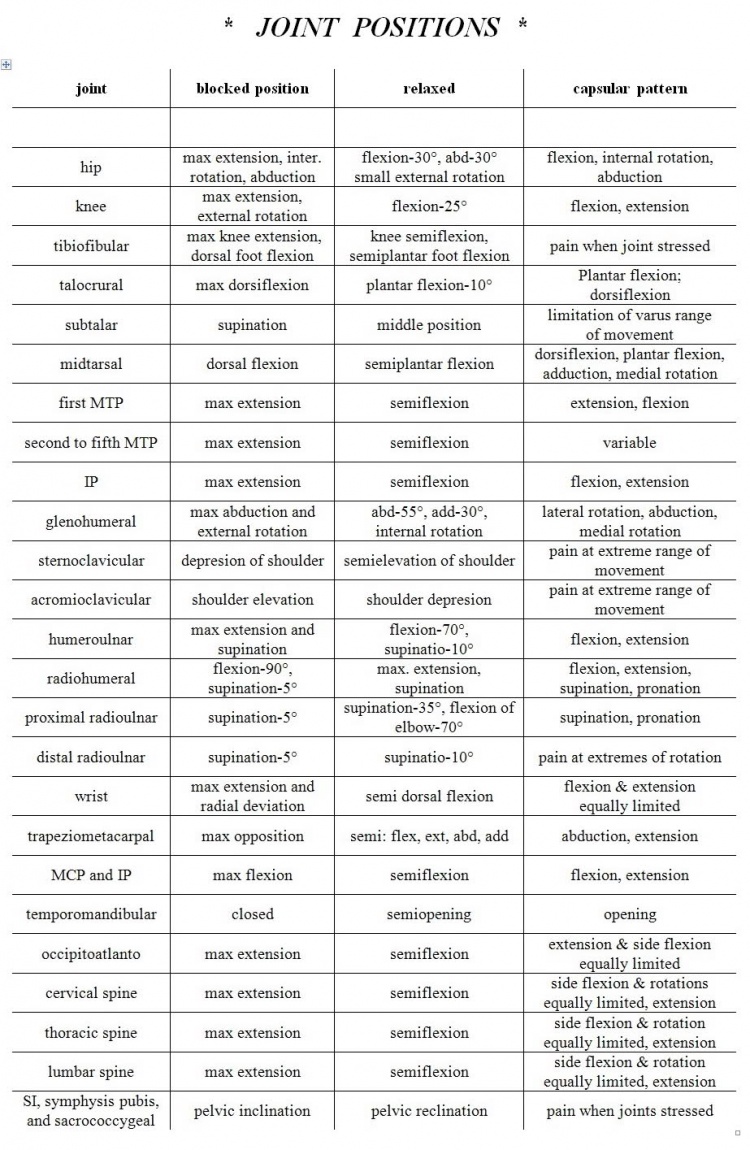
Capsular and Noncapsular Patterns Physiopedia
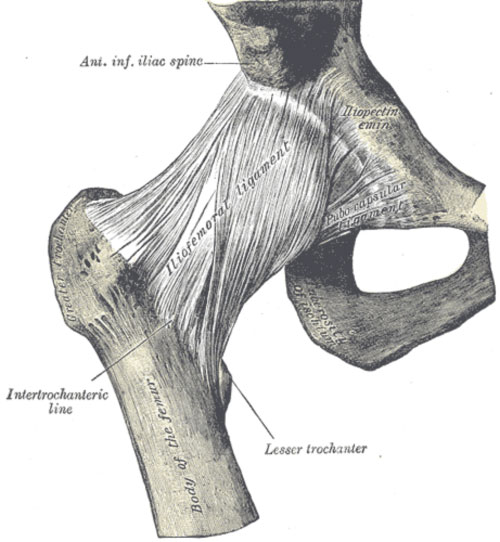
Hip Anatomy
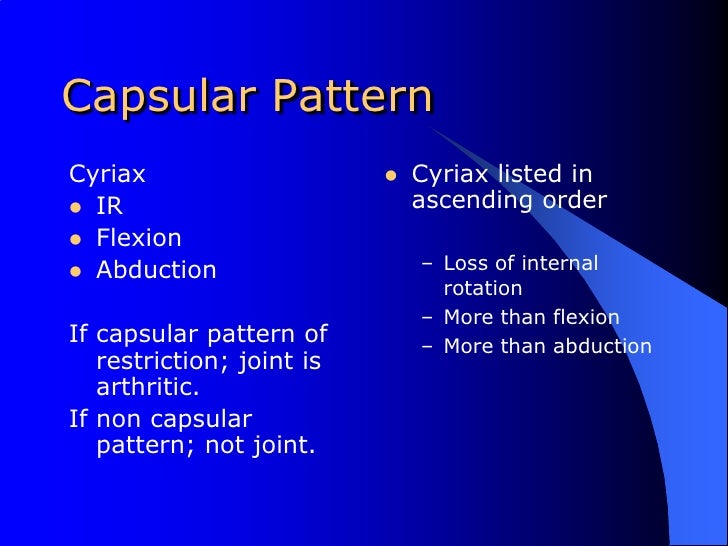
Differential Diagnosis Of The Hip2010

Anatomy of the hip joint capsule. The ligaments of the (left) hip joint

Arthroscopic Capsulotomy, Capsular Repair, and Capsular Plication of

Hip Joint Articular Capsule Medical Stock Images Company
Web The Proposed Pathomechanism Of Hip Microinstability Begins With Subtle Anatomic Abnormalities In The Presence Of Repetitive Hip Joint Rotation And Axial Loading As Seen In Sports Such As Golf, Figure Skating, Gymnastics, Ballet, Martial Arts, Football, Tennis And Baseball [ 1, 2 ].
And, Little Or No Limitation Of External R E Tation (1).
Flexion, Abduction, Medial Rotation (But In Some Cases, Medial Rotation Is Limited)
They Describe The Increasing Symptoms Of Pain And Stiffness, The Point At Which The Hip Joint.
Related Post: