
Irish Naming Patterns
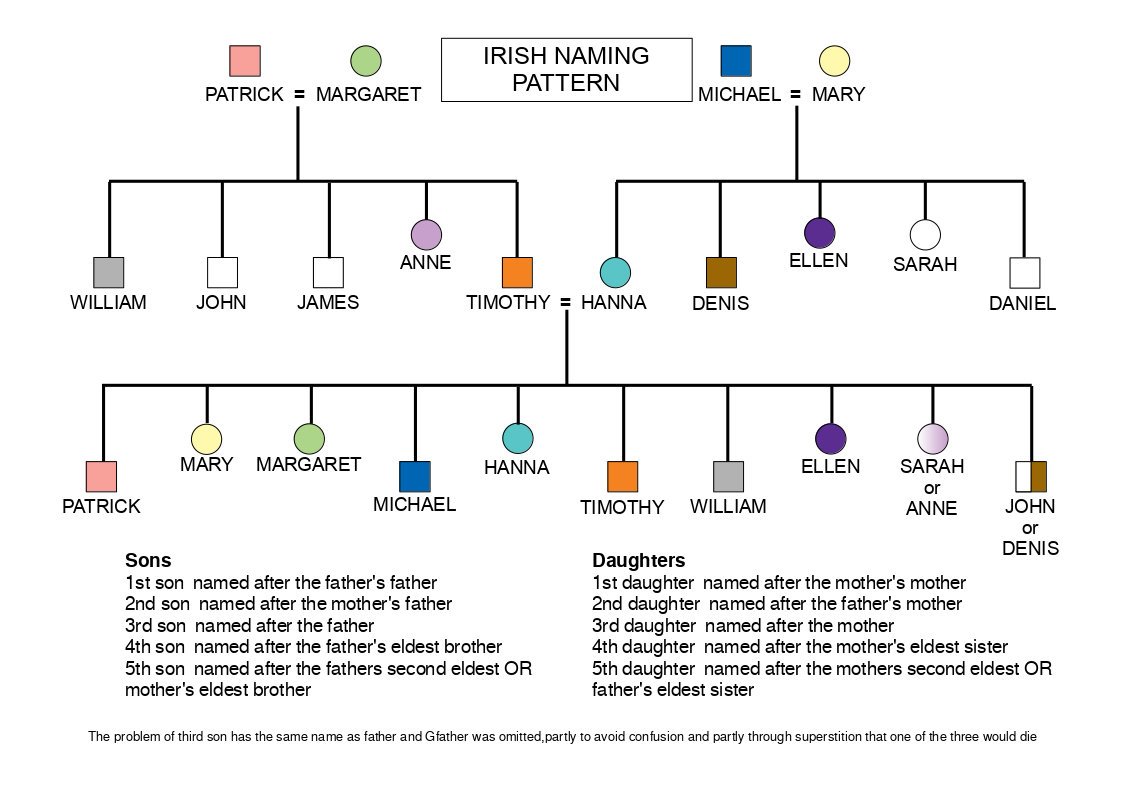
Irish Naming Patterns - Third born son named after his father. In this post, learn how to understand your irish ancestors’ naming conventions to learn more about your family tree. Some families used them, some didn't. All that's needed is for one sibling in a family to have used this pattern with accuracy (even if one's own direct ancestor A random collection of 10 more irish family names and their meanings. 2nd son was named after the mother's father. First born son named after his father's father. Most given names have at least one associated nickname and these nicknames can be recorded in civil registrations as a first name. Our ancestors in ireland had a very strong tradition for naming the eldest children in each family. Have you ever reached a stumbling block in your ancestry research? There may be many differences, depending upon the irish community. You will probably notice how the same first names get repeated in each generation, and this pattern can help you to predict the unknown name of a grandparent for example. Let’s examine the traditional aspects of how given names and surnames are employed, as well as the incorporation of middle names and prefixes within irish names. The naming pattern goes like this. Many times the child would go by their middle name, not the first name. Web this database is an excellent resource for learning about the origin and patterns of irish names and surnames. First son named after the paternal grandfather, first daughter named after the maternal grandmother, etc.). Many irish families followed a traditional naming pattern, which eventually began to die out in the early twentieth century. Third born son named after his father. First son usually named for the father's father. However, this is no longer a common practice. Web irish naming conventions are characterised by a distinct structure, integrating both historical and cultural significances. Have you ever reached a stumbling block in your ancestry research? Next down was bridie which is short for bridget. Web irish naming patterns were very precise for about two centuries. The twenty most common irish surnames, their meaning and prevalence in the 1850s, 1890 and now. Second born son named after his mother's father. Third born son named after his father. Web traditional irish naming patterns and conventions. It’s really interesting to see this naming pattern in your own family tree, but it’s especially valuable to know for family history. 2nd son was named after the mother's father. First son named after the paternal grandfather, first daughter named after the maternal grandmother, etc.). Many irish families followed a traditional naming pattern, which eventually began to die out in the early twentieth century. In ireland, there has traditionally been a very strong naming pattern for the eldest children born into a. 1st son was named after the father's father. The naming pattern goes like this. 2nd son was named after the mother's father. First son usually named for the father's father. First born son named after his father's father. Third son usually named for the father. Our ancestors in ireland had a very strong tradition for naming the eldest children in each family. First son named after the paternal grandfather, first daughter named after the maternal grandmother, etc.). Web discover 15 lucky irish baby names for your little one! The second son would be named after his maternal grandfather. Third born son named after his father. 2nd son was named after the mother's father. Second son usually named for the mother's father. Below is a typical pattern the irish families would us when naming their children. However, this is no longer a common practice. Web irish naming patterns. First born son named after his father's father. In search for names of your irish ancestors, it might be helpful to identify a family that is related to your by the names in each family. Web discover 15 lucky irish baby names for your little one! The eldest son would be named after his paternal grandfather. It’s really interesting to see this naming pattern in your own family tree, but it’s especially valuable to know for family history research. 1st son was named after the father's father. Web do irish naming patterns work for you? In this post, learn how to understand your irish ancestors’ naming conventions to learn more about your family tree. A short. Web irish and scottish naming patterns. The twenty most common irish surnames, their meaning and prevalence in the 1850s, 1890 and now. First born son named after his father's father. It’s really interesting to see this naming pattern in your own family tree, but it’s especially valuable to know for family history research. Web a traditional naming pattern was often. Our ancestors in ireland had a very strong tradition for naming the eldest children in each family. Many times the child would go by their middle name, not the first name. First born son named after his father's father. Below is a typical pattern the irish families would us when naming their children. First son usually named for the father's. Web irish naming conventions are characterised by a distinct structure, integrating both historical and cultural significances. Web fiona fitzsimons discusses traditional irish naming patterns, knowledge of which can be extremely helpful in piecing together your irish family history. In this post, learn how to understand your irish ancestors’ naming conventions to learn more about your family tree. In ireland, there has traditionally been a very strong naming pattern for the eldest children born into a family: Many times the child would go by their middle name, not the first name. Web this database is an excellent resource for learning about the origin and patterns of irish names and surnames. Most given names have at least one associated nickname and these nicknames can be recorded in civil registrations as a first name. Our ancestors in ireland had a very strong tradition for naming the eldest children in each family. The naming pattern goes like this. Web do irish naming patterns work for you? 1st son named for paternal grandfather with mother’s maiden. 2nd son was named after the mother's father. A short history of irish last names plus the 'o' and the 'mc' explained. The eldest son would be named after his paternal grandfather. Web a traditional naming pattern was often used by irish parents until the later 19th century: Second son usually named for the mother's father.
AF011 Irish Naming Patterns Discover Your Irish Origins from Names

Traditional Irish naming patterns Irish traditions, Genealogy, Irish
Traditional Irish naming patterns Blog
Traditional Irish Naming Patterns and Conventions
Traditional Irish Naming Patterns and Conventions Who are You Made Of?

Irish naming patterns Artofit

Traditional Irish naming patterns for sons and daughters History blog

Edmond Genealogical Society Research Aids

Irish Naming Patterns Irish family history, Irish traditions, Family
Crowe Genealogy Ireland and the World
All That's Needed Is For One Sibling In A Family To Have Used This Pattern With Accuracy (Even If One's Own Direct Ancestor
In This Letter Will Will Discuss A Built In Set Of Clues Left By Many Of Our Irish Ancestors, Hidden In The Pattern Of How They Named Their Children.
Next Down Was Bridie Which Is Short For Bridget.
Fourth Son Usually Named For The Father's Eldest Brother.
Related Post: